Gestapo sensory-deprivation confinement
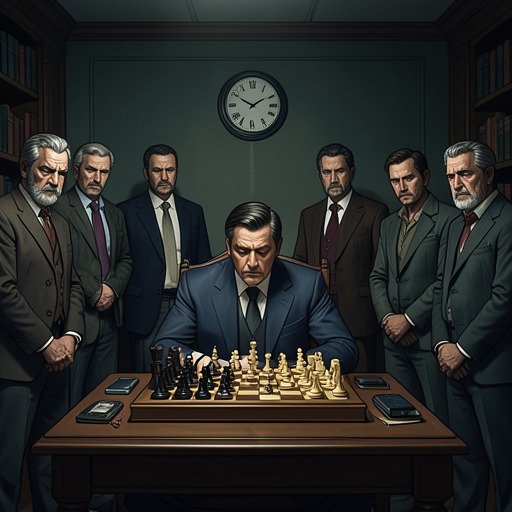
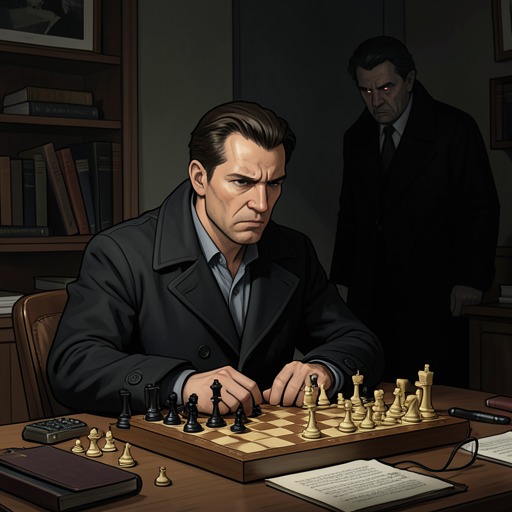
The Royal GameGestapo sensory-deprivation confinement is the system Dr B describes as the Gestapo’s method of pressuring selected detainees for money or information. Kept alone in a room at the Hotel Metropole, the Gestapo headquarters, he is denied ordinary contact, occupation, and a sense of time. What appears at first to be a private hotel room becomes an instrument of interrogation: its silence and sameness set his thoughts circling until he fears he will reveal secrets simply to escape the isolation.
Selection and Purpose
Dr B distinguishes his treatment from that of people sent to concentration camps. The Gestapo placed him in a smaller category of detainees from whom it hoped to extract funds or valuable information. He says that his own person was not the object of particular interest; rather, the authorities suspected he had knowledge of money and records connected to people and institutions opposed to the new regime. They wanted material that might implicate monasteries in concealing assets, as well as the imperial family and those who had supported the monarchy.
The authorities had reason to believe that some funds handled through Dr B’s office remained beyond their reach. They had learned that he and his associates were administrators and confidants of their opponents, and arrested him on the first day of the regime to obtain the information he possessed. He had sent incriminating papers to his uncle through a trusted housekeeper, but whether the papers arrived safely became one of the unanswered questions that would torment him during interrogation.
The Hotel Metropole’s separate rooms could be presented as preferential treatment. Dr B rejects that appearance: detainees in his category were not crowded into prison-camp barracks but kept individually in the hotel, where isolation itself served the interrogators’ purpose. The contrast is central to his account. A room, a bed, and warmth did not make the detention humane; the arrangement substituted a less visible pressure for the more overt hardships associated with a camp.
The Room and the Loss of Ordinary Time
The room contained a door, bed, armchair, washbasin, and barred window, but its few furnishings did not provide meaningful company or distraction. The door remained locked, and the window looked onto a firewall. Dr B had no book, newspaper, paper, or writing implement. The authorities took his watch, pencil, and penknife, and denied him cigarettes. Even the warder, the only person he saw, was forbidden to answer questions or speak.
This removal of objects and contact narrowed his world to the room and its fixed contents. Dr B describes the detainee as left alone with his body and a handful of mute things: table, bed, window, and washbasin. Without a clock, changing view, conversation, or task, he could not mark the passage of the day. The repeated view of the same patterned wallpaper became so familiar that its lines seemed etched into his mind. He likens the isolation to being cut off beneath the surface of the world, with no assurance of being brought back.
The deprivation did not depend on constant physical action by the guards. Its force came from what was withheld: sound, new sights, social exchange, and any independent way to organize attention. Dr B presents the resulting silence not as an empty background but as the active means of pressure. With nothing outside himself to interrupt his attention, thought itself became difficult to control.
Interrogation and Rumination
After fourteen days, the interrogations began. Dr B was summoned without knowing whether it was day or night, led through corridors, made to wait, and brought before uniformed questioners and a sheaf of files whose contents he could not see. The interrogators mixed direct questions with misleading ones while recording answers out of his sight. He could not tell what they already knew about his office, which papers had reached his uncle, or what clerks, priests, or intercepted correspondence might have disclosed.
That uncertainty gave each answer a double risk. If he admitted something the Gestapo did not already know, he might expose another person to punishment; if he denied too much, he might incriminate himself. The questioning therefore continued inside the cell after the formal interview ended. Returned to the same table, washbasin, and wallpaper, he reconstructed his answers word by word, imagined what he ought to say next time, and tried to guess what the interrogators had written down. His own review became an unending second interrogation, extending into sleep rather than stopping after the interview.
To resist the pressure, Dr B tried to occupy his mind with material he had memorized: the national anthem, childhood rhymes, Homer, and passages from the civil law code. He also attempted mental arithmetic, adding and dividing arbitrary numbers. But he found that he could not reliably hold the numbers in mind or sustain concentration. His efforts were repeatedly displaced by the same questions about what the Gestapo knew, what he had said, and what he might be required to say next.
Deterioration and the Breaking Point
Dr B describes the confinement as lasting four months, a duration he insists cannot be conveyed merely by naming it. In the room, time had no ordinary measures; the repeated furnishings, the warder’s silent delivery of food, and the recurring thoughts made each stretch of waiting resemble the last. What had initially been manageable composure in the interrogations began to fail. He became unable to articulate simple sentences without stammering and found himself fixated on the pen recording his answers, as though watching it might let him pursue his own thoughts.
That change made the intended pressure concrete. Dr B feared he was nearing a point at which he would disclose everything he knew, and perhaps more, merely to obtain a moment’s respite. One evening, as the warder brought food, he called after him that he wanted to be questioned and would make a declaration, offering to reveal the papers and money. The warder did not hear him, or perhaps chose not to respond. The moment shows how isolation had brought him close to volunteering the very information the interrogators sought, before any new questioning began.
Temporary Interruption
At the point of greatest strain, an unexpected event offered Dr B temporary rescue. He places it at the end of July, on a dark, overcast, rainy day, and remembers the rain as he was led through the corridor to an interrogation. As part of the process, detainees had to wait before questioning; Dr B explains that the delay followed the abrupt summons and extended the uncertainty, leaving the detainee’s body tired and mind less clear. His account introduces this prolonged wait as the immediate circumstance surrounding the reprieve, while the precise event that interrupted his condition falls beyond the described passage.
The confinement’s significance lies in the reversal between apparent accommodation and actual purpose. The Hotel Metropole room was not simply a place where Dr B was held: its locked door, unchanging view, missing objects, and enforced silence organized his days around uncertainty and self-questioning. By showing how that environment altered his concentration and brought him close to a voluntary confession, the account makes isolation itself legible as an interrogation technique and as a form of control over time, attention, and speech.